Onager
From Warlike
Q19779
The onager was a Roman torsion-powered siege engine. It is commonly depicted as a catapult with a bowl, bucket, or sling at the end of its throwing arm. The onager was first mentioned in 353 AD by Ammianus Marcellinus, who described onagers as the same as a scorpion. The onager is often confused with the later mangonel, a "traction trebuchet" that replaced torsion powered siege engines in the 6th century AD.
Wikimedia, Wikidata
catapult, mangonel, polybolos, sambuca, springald, torsion siege engine,
-
Location: KML, Cluster Map, Maps,
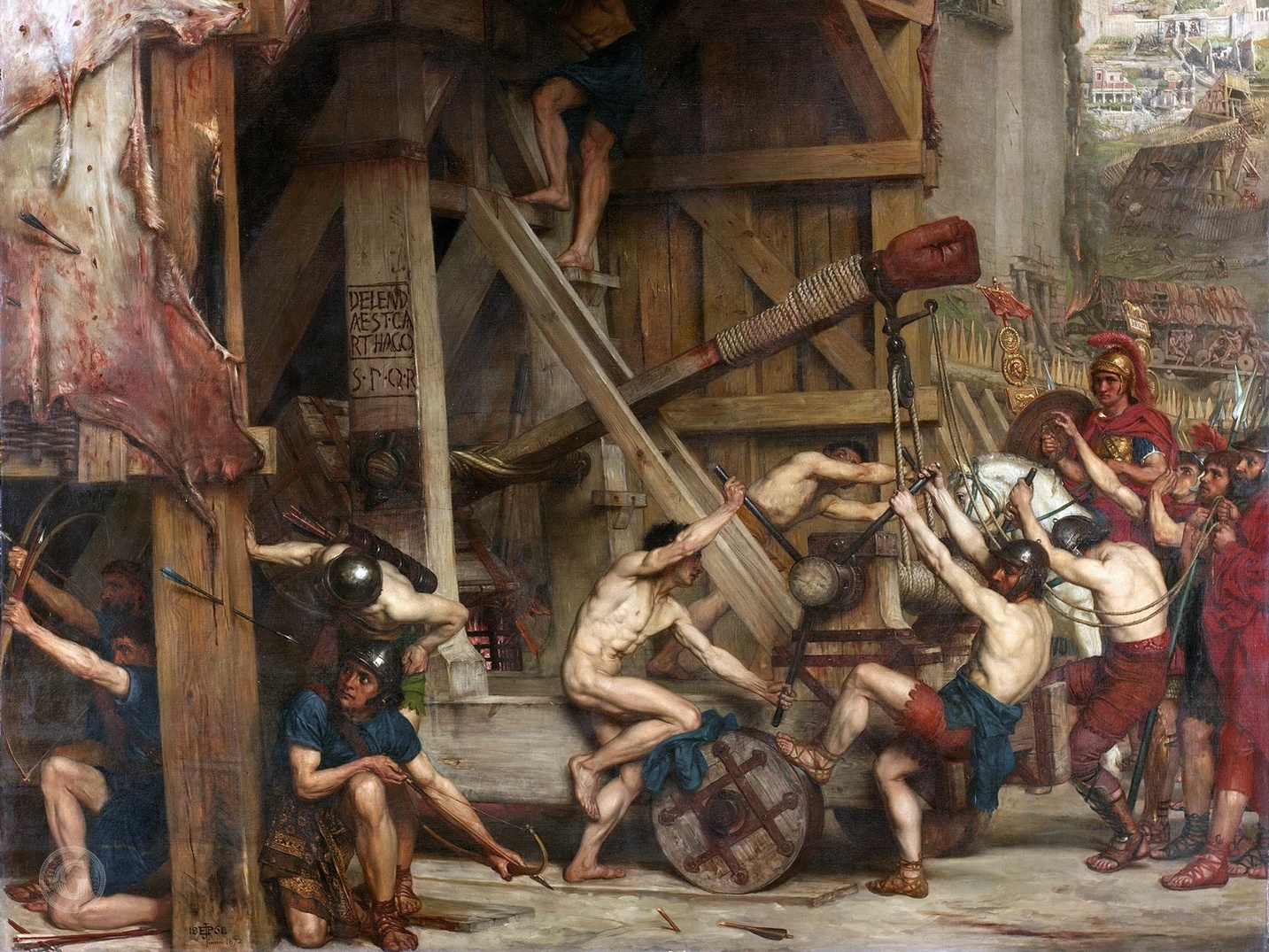 Catapulta by Edward Poynter (cropped, 4to3)
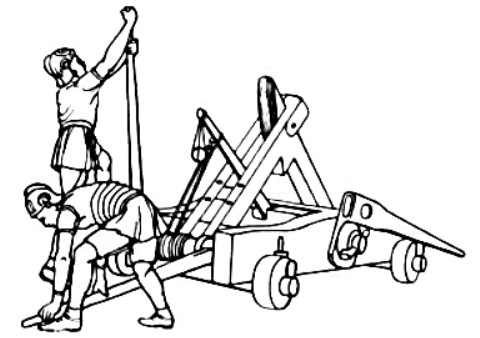 Sketch of an onager, a type of torsion siege engine
 Onager de Reffye
 00-machines-of-war-catapult-1708x900
 The Catapult (1868). Oil on canvas, 155.5 x 183.8 cm (61.2 x 72.3 in). Laing Art Gallery, Newcastle upon TyneCatapulta by Edward Poynter (cropped, 4to3)Sketch of an onager, a type of torsion siege engineOnager de Reffye00-machines-of-war-catapult-1708x900The Catapult (1868). Oil on canvas, 155.5 x 183.8 cm (61.2 x 72.3 in). Laing Art Gallery, Newcastle upon Tyne
- Mechanics of the onager - scientific article published in 1986, Q1860
| Type | Subtype | Date | Description | Notes | Source |
|---|---|---|---|---|---|
| commons | image | Catapulta by Edward Poynter (cropped, 4to3) | Commons | ||
| commons | image | Sketch of an onager, a type of torsion siege engine | Commons | ||
| commons | image | Onager de Reffye | Commons | ||
| commons | image | 00-machines-of-war-catapult-1708x900 | Commons | ||
| commons | image | The Catapult (1868). Oil on canvas, 155.5 x 183.8 cm (61.2 x 72.3 in). Laing Art Gallery, Newcastle upon Tyne | Commons | ||
| commons | image | Catapulta by Edward Poynter (cropped, 4to3) | Commons | ||
| commons | image | Sketch of an onager, a type of torsion siege engine | Commons | ||
| commons | image | Onager de Reffye | Commons | ||
| commons | image | 00-machines-of-war-catapult-1708x900 | Commons | ||
| commons | image | The Catapult (1868). Oil on canvas, 155.5 x 183.8 cm (61.2 x 72.3 in). Laing Art Gallery, Newcastle upon Tyne | Commons | ||
.jpg)


